You bought a slice of Lake Keowee, now you need the dock that matches your lifestyle. The right choice affects everything from daily boat access to long‑term value when you sell. You also have permits, materials, lift options, and water level changes to consider. This guide gives you a clear, local roadmap to choose confidently and budget wisely. Let’s dive in.
Lake Keowee rules and permits
Before you sketch a design, secure approvals. Lake Keowee is managed by Duke Energy, and most dock work requires review under its Shoreline Management Plan. Oconee County handles building and electrical permits. Many neighborhoods also have HOA rules that shape design, footprint, and materials.
Plan your first steps:
- Contact Duke Energy shoreline management for site guidance and allowed dock types.
- Check with Oconee County Building & Codes for permits and inspections.
- Review HOA covenants for design, color, and size rules.
- Schedule a site survey and bottom substrate check with a qualified dock contractor.
Approvals can take weeks to months depending on scope. Starting early keeps your project on track.
Floating vs. fixed docks
Your site and priorities drive this decision. Consider shoreline steepness, typical Keowee water level swings, bottom composition, wind exposure, and neighboring boat traffic.
Floating docks
Floating docks ride on enclosed floats and move with water levels. They are useful where lakebed rock makes pile driving harder.
Pros:
- Follow water level changes automatically.
- Often lower cost than fixed docks on rocky sites.
- Easier to modify or relocate.
Cons:
- More movement in wind and wakes.
- Floats and connections wear and may need replacement over time.
- Can feel less stable on very exposed shorelines.
Best fit: variable water levels, rocky bottoms, owners who want flexibility and easier modifications.
Fixed docks
Fixed or pile docks sit on piles driven into the lakebed. They feel solid underfoot and suit outdoor furnishings and entertaining.
Pros:
- Very stable platform for lounging and hosting.
- Long‑lasting structure when built with durable piles and framing.
- Handles heavier loads and wider decks.
Cons:
- Must be designed for low water. If levels drop, access can be limited.
- Higher installation cost and more invasive construction.
- Harder and more expensive to change later.
Best fit: sheltered coves with modest wave action and suitable substrate for piles.
Hybrid designs
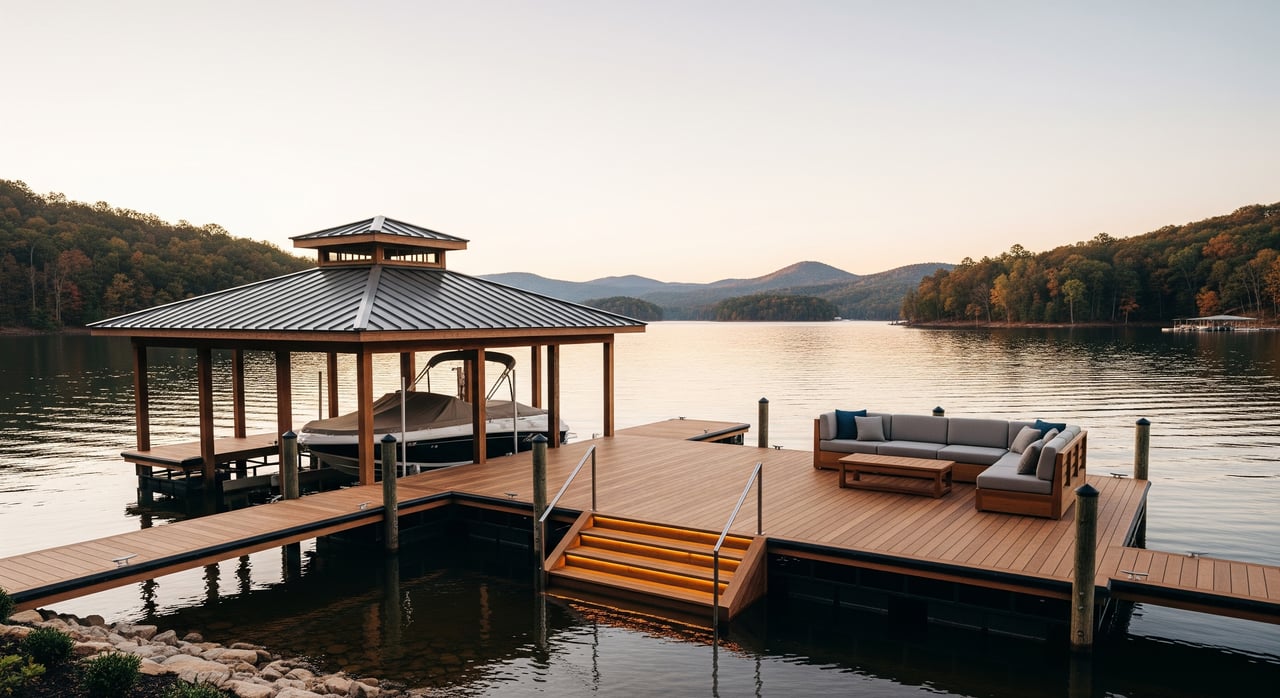
Hybrids combine a fixed walkway from shore with a floating platform at the end. You get steady access near land and a section that rises and falls with the lake. Hybrids are popular where you want a stable entry point plus a lift that adapts to water level swings.
Decking and framing materials
Your finish choices affect safety, maintenance, and temperature underfoot.
Decking choices
- Pressure‑treated lumber: budget friendly and familiar. Needs sealing and periodic upkeep. Can splinter if not maintained.
- Composite or PVC decking: higher upfront cost, low maintenance, resists rot. Choose textured, slip‑resistant boards to improve traction. Some products run warm in peak summer sun.
- Hardwood species: premium look and durable. Higher cost and may have sourcing limits.
- Aluminum or grating systems: lightweight and low maintenance. Common in commercial or utility installs.
Framing, floats, and hardware
- Floats: modern HDPE or encased closed‑cell foam offers durability and lower maintenance than old barrel styles.
- Piles: pressure‑treated timber, steel, helical, or concrete. Your contractor will match method to bottom conditions and exposure.
- Hardware: use marine‑grade stainless or galvanized fasteners. Quality hardware improves longevity.
Environmental notes: minimize shading over aquatic vegetation where required and avoid unapproved preservatives. Your permits will guide what is acceptable on your shoreline.
Boat lifts that fit your boat
Lifts protect your investment from waves, wakes, and fouling. Choose by boat weight, beam, and how much vertical travel you need with Keowee’s water changes.
Common lift types
- Mechanical cable or gear lifts: versatile and cost‑effective for many runabouts and pontoons.
- Hydraulic lifts: smooth and strong for larger boats. Higher cost.
- Cantilever or vertical lifts: good in specific depth or clearance scenarios.
- PWC lifts and drive‑on floats: compact solutions for waverunners.
Mounting options include lifts supported by the dock, independent piling‑mounted lifts, or units that attach to floating sections. Independent piles reduce structural load on the dock for heavier boats.
Sizing, power, and safety
- Capacity: size for your boat’s full weight with fuel, gear, and a margin for future upgrades.
- Vertical travel: confirm lift rise accommodates Keowee’s high and low water.
- Power: plan for shore power and electrical permits. GFCI protection is essential.
- Maintenance: inspect cables, hydraulics, and bunk alignment. A short annual service visit can prevent costly repairs.
Budget and lifecycle costs
Final pricing depends on size, materials, site access, substrate, lift choice, and permitting. Use these planning ranges:
- Small floating dock: about $5,000 to $15,000 installed.
- Mid‑sized floating dock with quality floats and composite: about $15,000 to $35,000.
- Basic fixed dock on easier bottoms: about $15,000 to $40,000.
- Larger or complex fixed docks on rocky sites: $40,000 to $100,000+.
- Lifts: PWC $1,500 to $4,000; small boat $3,000 to $10,000; larger or hydraulic $8,000 to $30,000+.
- Electrical: $1,000 to $5,000 depending on distance and scope.
- Annual maintenance: about $200 to $1,500, more for large or fixed systems.
Plan for a mid‑life refresh. Float replacement, new decking, or lift upgrades can run several thousand to tens of thousands depending on scope.
Site and usability checklist
Use this quick list to evaluate an existing dock or plan a new one.
Structural and safety:
- Solid moorings and load‑rated cleats
- Non‑slip decking and secure handrails where needed
- Code‑compliant electrical with GFCI protection
- Swim ladder and clear water access
Boat handling:
- Lift sized for weight and beam
- Adequate depth at both high and low water
- Properly placed bumpers and fenders
Usability and access:
- Dock width and turning room for easy movement
- Gangway length and slope manageable at low water
- Storage built for wet conditions
Maintenance and condition:
- Floats or piles free of rot or corrosion
- Deck boards secure with minimal wear
- Hardware and fasteners tight and rust‑free
Compliance and documentation:
- Approvals on file for dock and shoreline work
- No unapproved modifications along the bank
Resale and lifestyle features
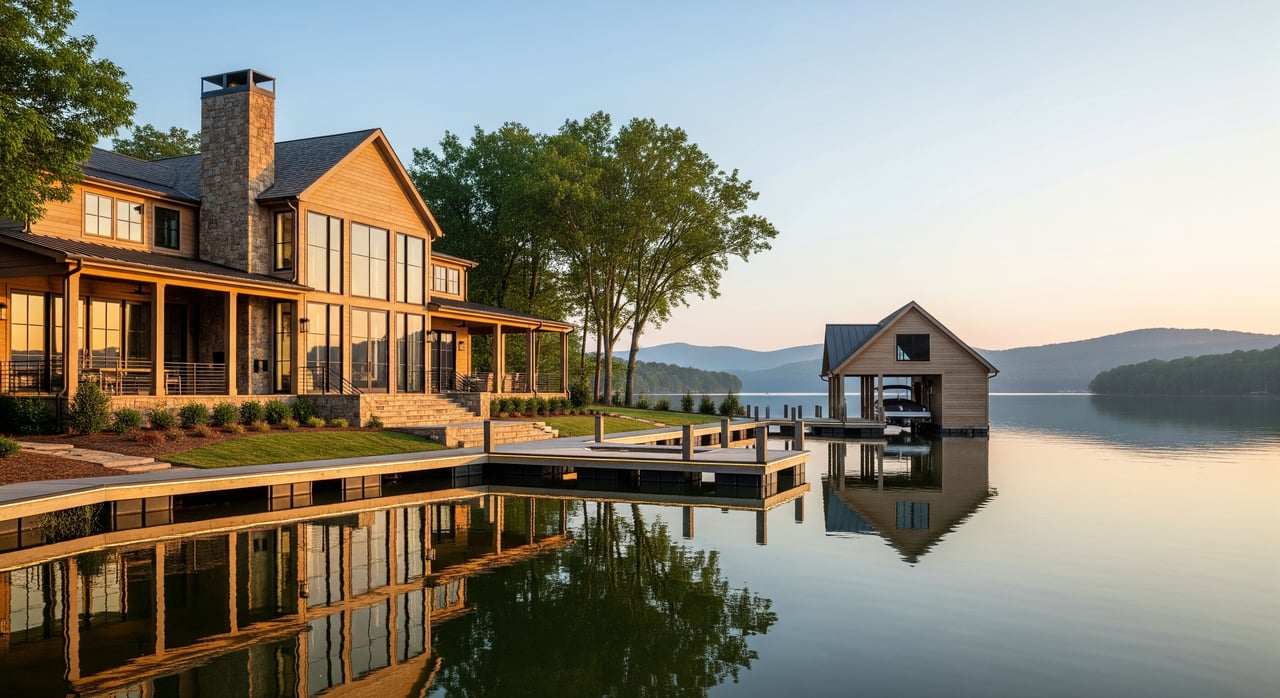
A well‑designed dock can elevate day‑to‑day living and your property’s appeal when you sell. Features that resonate with Lake Keowee buyers include a covered slip or well‑sized lift, composite decking for low upkeep, quality lighting on timers, and clean, coordinated hardware. Thoughtful choices now can reduce maintenance, improve safety, and support a smoother resale later.
Your planning timeline
Every shoreline is different, but a simple sequence keeps things moving:
- Early consultation: call Duke Energy shoreline management and Oconee County to confirm what is allowed on your lot.
- Site workup: hire a dock contractor to measure depths at high and low pool, check bottom composition, and assess wind and wave exposure.
- Design and bids: finalize dock type, lift, and materials. Get 2 to 3 bids.
- Permits and approvals: submit plans to Duke Energy, Oconee County, and your HOA.
- Build and inspect: schedule construction, electrical, and final inspections.
Expect several weeks to months from first call to completion depending on scope and review timelines.
The bottom line
On Lake Keowee, the best dock is the one that fits your shoreline and how you live. Floating docks shine when the bottom is rocky and water levels shift. Fixed docks reward you with a stable hangout in sheltered spots. Your materials, lift choice, and permitting plan tie it all together for long‑term enjoyment and value.
Ready to match your dock plans to the right Lake Keowee property or prep your home for market? Reach out to nora hooper for local, concierge‑level guidance.
FAQs
What should Seneca homeowners know about Lake Keowee dock permits?
- Most docks and shoreline changes need Duke Energy review plus Oconee County permits. Start with both agencies and check HOA rules before designing.
Which is better for Lake Keowee water level changes, floating or fixed?
- Floating docks adapt to level swings, while fixed docks stay at one height. Your site exposure and bottom conditions often determine the best fit.
How do I choose a boat lift for a Keowee pontoon or runabout?
- Size the lift by total weight and beam, confirm vertical travel for low water, and select mechanical or hydraulic drive based on capacity and budget.
What are typical costs to build a Lake Keowee dock?
- Small floating docks often start near the low five figures, while larger fixed systems with lifts can reach into the low six figures depending on site and materials.
What maintenance keeps a Lake Keowee dock in good shape?
- Inspect floats or piles, tighten hardware, clean decking, and service lift cables or hydraulics yearly to prevent major repairs.